I only get paid if I get you paid!
Fighting for Injured Workers Across Ohio
I provide dedicated legal support to injured Ohio workers, guiding them through every step of the workers’ compensation claims process.
ANNOUNCEMENT
Aaron Bucco, Attorney at Law, is pleased to announce the acquisition of Thomakos Law, a respected legal practice serving Tuscarawas County and the surrounding areas. This acquisition marks a significant step in the firm’s continued growth and includes expanding to a second office location in New Philadelphia, expanding the firm’s reach and ability to serve clients across the region.
Clients can expect continued personal attention, and a seamless transition of representation. Steve will remain available to speak to and meet with clients during the transition. The New Philadelphia office is located at 120 N Broadway St, New Philadelphia, Ohio 44663.

Meet Attorney Aaron Bucco
Aaron was raised in a hardworking family and close-knit community, values that continue to shape his approach to helping injured workers. After graduating with honors from Denison University in 2003, he earned a full academic scholarship to Duquesne University School of Law in Pittsburgh.
During law school, Aaron served as Editor-in-Chief of the Duquesne Business Law Journal and gained valuable experience clerking for multiple law firms in downtown Pittsburgh. He earned his Juris Doctorate in 2006 and returned to Ohio, where he was admitted to practice law later that year.
Since 2008, Aaron has dedicated his career to helping injured workers throughout Ohio. He understands the financial, physical, and emotional toll a work-related injury can take on individuals and their families. Navigating the Ohio Bureau of Workers’ Compensation (BWC) system can be overwhelming, especially when facing claim disputes or treatment denials.
With a practice focused 100% on workers’ compensation law, Aaron is committed to guiding injured workers through the complex claims process and fighting for the benefits they deserve.
Work-related injury? We’re here to help you.
How We Help Injured Workers
Navigating the Ohio workers’ compensation system can be overwhelming, especially when you’re recovering from a work-related injury. I represent injured workers across Ohio, guiding them through every stage of the workers’ compensation claims process to ensure they receive the benefits they deserve.
Whether you’re:
- Filing a First Report of Injury (FROI) to start your claim
- Attending hearings before District Hearing Officers or Staff Hearing Officers at the Ohio Industrial Commission
- Appealing a denied claim after an unfair decision
- Fighting for continued benefits when your employer or Managed Care Organization (MCO) tries to cut them off
I’ll be by your side every step of the way. I work directly with you and your treating doctors to ensure all necessary medical documentation is in place, helping secure treatment approvals, lost wage compensation, and ongoing benefits under Ohio workers’ compensation laws. If your employer or the Bureau of Workers’ Compensation (BWC) is making the process difficult, I’ll fight to protect your rights and get you the compensation you’re entitled to.

A Personal Approach to Workers’ Compensation Claims
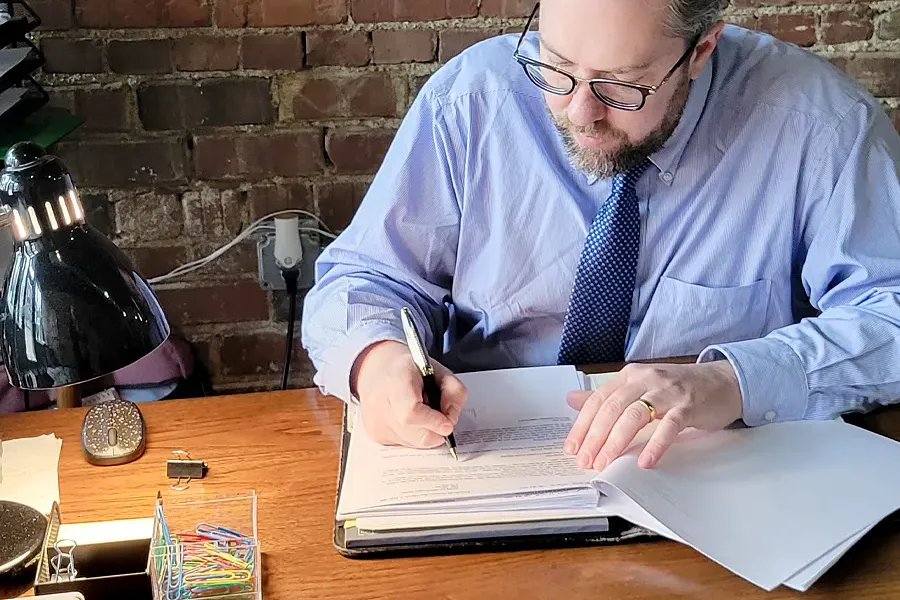
A work injury can disrupt your life, affecting both you and your loved ones. I understand how important every claim is, which is why I personally work with my clients and their doctors to ensure that necessary medical treatments and benefits are approved by the Bureau of Workers’ Compensation and the Industrial Commission of Ohio.
When you hire me, you won’t be passed off to someone else. You’ll have a direct line of communication with me whenever you have questions, and I will personally represent you at hearings before the Industrial Commission of Ohio. If you want to sit down and discuss your case in person, I will always make time to meet with you.
Dedicated to Workers’ Compensation Law
Workers’ compensation is my sole focus. Ohio’s workers’ compensation laws are complex and constantly evolving, making it essential to have an attorney who is dedicated to this field. With years of experience and a commitment to staying up to date on legal changes, I provide the knowledge and advocacy needed to protect your rights and maximize your claim.
You can trust that I will do everything within the law to ensure you receive the medical treatment, wage benefits, and compensation you are entitled to.

FAQ's
Find answers to common questions about your rights, benefits, and claims under workers’ compensation laws.
For personalized legal advice, contact our experienced attorneys for a freeconsultation.
If you have a work-related injury, give Aaron a call at 740.222.7777 or email him at
aaron@injuredworkerohio.com.
He will work directly with your doctors and the Ohio
BWC to ensure you receive all treatment and benefits
to which you are entitled.

How Do Attorney Fees Work If I Only Have to Pay if I Win?
Many injured workers try to handle their workers’ compensation claims alone because they worry about the cost of hiring an attorney. But with me, you don’t pay anything upfront. I only receive a fee if I successfully obtain or extend benefits for you—meaning you only pay once you get paid.
A workers’ compensation claim can be complicated, and the system isn’t designed to make it easy for injured workers to get the full benefits they deserve. Without experienced legal representation, many people miss out on compensation and medical coverage they’re entitled to. Even if you have an older claim, there’s a good chance you didn’t receive everything owed to you.
Don’t leave money on the table—contact me today for a free consultation. You’ll get honest, straightforward advice about your claim.
When Should I File a Worker’s Compensation Claim?
If you’ve been injured at work and haven’t yet filed a claim with the Ohio Bureau of Workers’ Compensation (BWC), the best time to do so is now. Legally, you have one year from the date of an injury to file a workers’ compensation claim in Ohio. However, waiting can make it harder to prove that your injury was caused by your job.
Both employers and Industrial Commission hearing officers tend to be skeptical of claims filed long after the injury occurred. Even if you think your injury is minor—such as a pulled muscle—it’s important to document it immediately. If the condition worsens over time, it’s much easier to amend an existing claim than to start a new one months later.
If you’re unsure about your rights or the status of a past claim, contact me for a free consultation. I’ll provide clear, honest advice about your next steps.
What Are Catastrophic Injuries and Wrongful Death Claims?
Serious workplace injuries and fatal accidents require an experienced workers’ compensation attorney who understands the complexities of these cases. For over 17 years, I have represented injured workers and surviving family members in catastrophic injury and wrongful death claims, including cases involving amputations, permanent disabilities, and fatal workplace accidents.
In cases of amputation, injured workers may be eligible for a lump sum loss-of-use award, but this compensation is only granted if properly requested and supported by clear medical documentation. Many unrepresented workers fail to receive the full benefits they deserve because of incomplete or unclear records. I work directly with medical providers to ensure all injuries are fully documented, helping secure the treatment and compensation you are entitled to from the Bureau of Workers’ Compensation (BWC) and the Industrial Commission of Ohio.
If a work-related injury results in death, death benefits may be available for surviving spouses and dependents. In some cases, additional compensation may be awarded based on specific circumstances, including the nature of the injury, survival time, and medical documentation regarding residual function before passing. These cases require a highly detailed approach, and I have years of experience advocating for families in these difficult situations.
Having an attorney who specializes in workers’ compensation claims for catastrophic injuries and wrongful death is crucial. If you need guidance, contact me for a free consultation to discuss your case.
What Are Temporary Total Disability Benefits?
If a work-related injury prevents you from returning to full-duty work, you may be eligible for temporary total disability (TTD) benefits. These benefits provide financial support to injured workers who are unable to perform any work activity due to a compensable workplace injury.
To qualify for TTD benefits, your treating physician must complete and submit a Medco-14 form, confirming that your inability to work is directly related to the allowed conditions in your claim. You must also submit a C-84 form to request payment of these benefits. Once temporary total disability benefits are approved, your claim is classified as a lost time claim, which can impact your employer’s workers’ compensation premiums.
Because of this, employers often contest TTD claims, using both legal and factual arguments to challenge benefits. If your employer is disputing your right to temporary total disability benefits, I can help. Contact me for a free consultation to discuss your case and ensure you receive the compensation you deserve.
What is Temporary Total Disability vs. Wage Loss?
If your doctor determines that you cannot return to full-duty work due to a work-related injury, you may qualify for temporary total disability (TTD) benefits or wage loss compensation, depending on your situation.
- Temporary Total Disability (TTD) Benefits – If your injury-related restrictions prevent you from working and your employer cannot accommodate those restrictions, you may qualify for TTD benefits.
- Working Wage Loss Benefits – If your employer offers light-duty work that meets your medical restrictions but pays less than your pre-injury wages, you may be eligible for working wage loss benefits to help offset the difference.
- Non-Working Wage Loss Benefits – If you are unable to return to your previous full-duty job but no longer qualify for TTD benefits, you may still be eligible for non-working wage loss compensation.
Determining which benefits apply to your situation can be complex. If you have questions about temporary total disability vs. wage loss benefits, contact me for a free consultation to discuss your options and ensure you receive the compensation you deserve.
How Are Workers’ Compensation Benefits Calculated?
Determining the correct payment rate for workers’ compensation benefits isn’t always straightforward, but it’s crucial to ensure you receive the full compensation you’re entitled to. Ohio’s workers’ compensation system uses two key calculations:
- Full Weekly Wage (FWW) – This is based on your earnings before the injury. It is calculated as the greater of:
- The average of your gross earnings (including overtime) in the six weeks prior to your injury, or
- Your gross earnings (excluding overtime) from the week immediately before your injury.
- Average Weekly Wage (AWW) – This is based on your earnings over a longer period and is used for ongoing benefits. It is calculated by averaging your gross earnings in the 52 weeks before your injury.
Temporary Total Disability (TTD) Benefit Rates
- For the first 12 weeks, TTD benefits are paid at 72% of your Full Weekly Wage (FWW).
- After 12 weeks, TTD benefits are paid at two-thirds (66.67%) of your Average Weekly Wage (AWW) if you remain unable to work.
Because these calculations directly impact the amount of benefits you receive, it’s critical to ensure they are accurate from the start. If the weeks or year leading up to your injury don’t accurately reflect your typical earnings—due to factors like seasonal work, job changes, or missed time—there may be ways to adjust your FWW and AWW to better reflect your lost income.
If you’ve suffered a work-related injury or believe your workers’ compensation benefits are being underpaid, contact me for a free consultation to ensure you receive the full compensation you deserve.
Do You Help With Getting Workers’ Compensation Treatment Approved?
If your employer or Managed Care Organization (MCO) is denying authorization for medical treatment related to your workers’ compensation claim, you’re not alone. Many injured workers assume their treatment will be approved automatically, but that’s not always the case.
For treatment to be authorized, it must be directly linked to the allowed conditions in your claim. However, treatment denials often happen simply because the correct diagnoses haven’t been formally added to the claim. One of the most valuable services I provide is working with your treating doctors to obtain medical records and ensure all necessary conditions are properly documented and included in your claim.
By making sure the allowed conditions in your case match the conditions being treated by your doctors, we can help avoid unnecessary delays and ensure you receive the medical care you need. If your workers’ compensation treatment has been denied, contact me for a free consultation to discuss your options.
What Are Self-Insured Claims vs. State Fund Workers’ Compensation Claims?
In Ohio, workplace injury claims fall into one of two categories: self-insured claims or state fund claims. Understanding the difference is important, as the process for handling each type varies.
- Self-Insured Claims – Large employers that are self-insured manage their own workers’ compensation claims—either internally or through a third-party administrator (TPA). These employers pay for claims directly rather than relying on the Ohio Bureau of Workers’ Compensation (BWC).
- State Fund Claims – Most Ohio employers participate in the state fund, meaning their workers’ compensation claims are managed by the BWC rather than the employer.
Each type of claim follows different administrative procedures, which can affect how benefits are approved, how disputes are handled, and who you need to contact for claim processing. If you’re unsure whether your claim is self-insured or state-funded—or if you’re experiencing delays or denials—contact me for a free consultation. I can help you navigate the process and ensure your claim moves in the right direction.
Workplace Safety Violations & VSSR Claims
If your injury was caused by an unsafe work environment, you may be eligible for additional compensation through a Violation of a Specific Safety Requirement (VSSR) claim. Employers in Ohio are required to follow documented workplace safety requirements outlined in the Ohio Administrative Code. When an employer fails to meet these standards and a worker is injured as a result, the injured worker may file a separate claim to hold the employer accountable.
What Qualifies as a VSSR Claim?
To prove a VSSR violation, two key conditions must be met:
- The employer violated a specific safety requirement listed in the Ohio Administrative Code.
- That violation directly caused your injury.
How VSSR Claims Impact Compensation
If a VSSR claim is successful, it increases the benefits paid in your workers’ compensation claim. The Industrial Commission of Ohio may award an additional 15% to 50% of the maximum temporary total disability (TTD) benefit rate for the year of your injury.
For example, if the maximum TTD rate for the year of your injury is $1,000 per week and you are awarded a 50% VSSR, the additional compensation would be:
- $500 per week multiplied by the number of weeks you received compensation
- If you received 10 weeks of benefits, your VSSR award would total $5,000
If you believe your injury was caused by an unsafe work environment, contact me for a free consultation. I can evaluate whether you have a valid VSSR claim and help you pursue the maximum compensation available under Ohio law.